
Canonical data and contracts

Define a warehouse-wide canonical model for items, locations, tasks, and resources, then version every field and publish deprecation schedules. Translate vendor payloads at the edge rather than polluting your core. Clear contracts reduce breakages during robot swaps, enable parallel run testing, and let analytics trust the lineage of every decision.

Events, streams, and time

Adopt an event-first design with durable streams, preserving ordering keys that reflect work units like waves, picks, or totes. Stamp processing times and handle retries idempotently. Distinguish real-time needs from near–real-time batch. Measure end‑to‑end latency, not just broker lag, and align alerting to business impact, not infrastructure noise.

Aligning WMS and ERP Without Friction

One source of inventory truth

Establish ownership for quantities by status, lot, and location, then automate reconciliation between cycle counts, robot telemetry, and shipping confirmations. When discrepancies occur, route them through workflow with business priorities. A single inventory truth prevents double promising, accelerates ATP, and shortens customer service resolution during seasonal pressure.

Orders, promises, and waves

Establish ownership for quantities by status, lot, and location, then automate reconciliation between cycle counts, robot telemetry, and shipping confirmations. When discrepancies occur, route them through workflow with business priorities. A single inventory truth prevents double promising, accelerates ATP, and shortens customer service resolution during seasonal pressure.

Financial hooks that still flow

Establish ownership for quantities by status, lot, and location, then automate reconciliation between cycle counts, robot telemetry, and shipping confirmations. When discrepancies occur, route them through workflow with business priorities. A single inventory truth prevents double promising, accelerates ATP, and shortens customer service resolution during seasonal pressure.

Orchestrating Robots with Confidence

Map required motions—tote lifts, pallet moves, aisle widths, gradient limits—against SKUs and order profiles before demonstrations. Pilots should simulate edge cases like congested docks and low‑light barcode scans. When gaps emerge, decide on process tweaks or vendor plugins, not heroic exceptions that haunt maintenance windows for years.
Use cost functions that incorporate travel time, lift limits, congestion predictions, and battery state rather than simplistic nearest‑robot picks. Incorporate human signals for priorities and exceptions. Blend auction, rule, and constraint solvers, then observe outcomes and retrain. The warehouse is dynamic; allocators must learn, not guess.
Operators crave clarity, not noisy maps. Build views that show backlog aging, blocked aisles, charger contention, and estimated time to clear queues. Pair visuals with actionable controls and safe overrides. Daily huddles become faster when everyone sees the same, trustworthy picture anchored to live, explainable metrics.

IoT Sensing that Illuminates Decisions

{{SECTION_SUBTITLE}}

Placement strategy, not gadget scatter
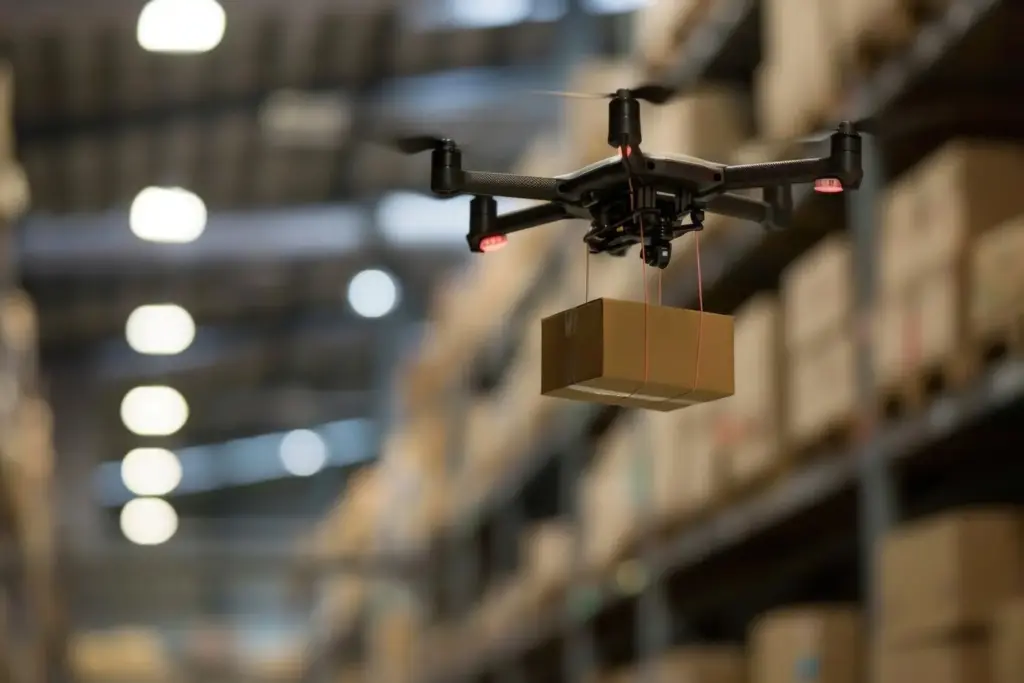
Start with heatmaps of congestion, damage, and dwell, then decide where readers, cameras, and beacons change decisions. Test glare, dust, and forklift vibration in situ. Every sensor must justify itself by driving a measurable action, like rerouting picks or scheduling service, rather than merely collecting attractive dashboards.

Edge computing that respects latency

Some detections cannot wait for the cloud. Run models at the edge to spot pallet tilt, zone encroachment, or unusual vibrations instantly, then publish summarized events upstream. This reduces bandwidth, protects privacy, and ensures safety interventions arrive within the milliseconds that separate near‑misses from expensive downtime.

Planning, Simulation, and the Digital Twin

Planning improves when it meets empirical feedback. Build a digital twin that mirrors constraints—aisles, equipment, labor, and variability—then run scenarios before expensive changes. Simulate peak season, added robots, or slotting shifts, and validate against telemetry. Decisions gain momentum because stakeholders see outcomes before committing budget or disrupting service.

Security, Reliability, and Change That Stick

Integration succeeds only when it is safe, predictable, and human-centered. We partition networks, protect credentials, and stage rollouts that respect shifts. Expect guidance on zero trust for OT, high availability patterns, incident drills, and training rituals that transform new tools into everyday confidence across the floor.

01

Segment, authenticate, observe

Segment warehouse networks by function, require mutual TLS for services, and rotate secrets automatically. Baseline normal traffic between WMS, ERP, robots, and sensors, then alert on deviations. Observability must tie into business KPIs so engineers know whether an alarm risks orders, safety, or only a redundant pathway.

02

Resilience under pressure

Design for graceful degradation: cached worklists, local decision loops, and offline modes for inbound and picking. Practice failovers during working hours, not midnights. Keep spare endpoints ready for vendor outages. When something breaks, customers should notice faster deliveries, not the heroics hiding your recovery work.

03

People, pilots, and adoption

Pair engineers with supervisors to co-design procedures, signage, and quick aids. Run short, reversible pilots with clear exit criteria and celebrate operator feedback. Training sticks when it solves a daily frustration. Invite comments below, share your lessons learned, and subscribe to follow the next build in this series.

Nuzavanoxazaropotuketu
Privacy Overview

This website uses cookies so that we can provide you with the best user experience possible. Cookie information is stored in your browser and performs functions such as recognising you when you return to our website and helping our team to understand which sections of the website you find most interesting and useful.